

Summer is gradually coming to a close, and autumn is just around the corner, bringing in a beautiful palette of colours that will soon transform the landscape around us.

As much as we love autumn, we have to think about the impact this transition period will have on our body. The changes in humidity, temperature and wind will require us to be supportive to our body by adjusting our food and our routines.
As this seasonal transition affects our bodies, it also impacts our skin. That’s why it’s important to adapt our skincare routine to the changing conditions. In this issue, we’ll explore how to support your skin through the shift from summer to autumn.
What happens during Autumn?
-
Humidity drop: This is the one of the biggest factors affecting our skin. In general, summer air holds more moisture that the autumn air. That means, that humidity drops by 40-50% in autumn and 60-70% in winter once the heating system is active. All these factors increase the skin’s transepidermal water loss (TEWL). In simple words, our skin won’t retain as much as moisture as it did during the summer.
-
Temperature shifts: During summer, our skin experiences vasodilation, which means that blood vessels expand to support healthy blood flow to the skin. During colder days, such as those in autumn, the blood vessels in the skin contract, resulting in reduced blood flow to the skin. What does this mean in practice? The skin cells receive fewer nutrients and less oxygen.
-
Wind exposure: Cold wind on our face is generally not good for the skin. It increases the rate of dehydration and can strip lipids from the skin’s surface. It can also trigger redness and increase skin sensitivity.
-
Barrier Function: In autumn, our skin naturally starts to decrease its oil production by 10% to 20%. This happens as the body prioritises internal warmth rather than cooling. As a result, the lipid matrix (ceramides, cholesterol, and fatty acids) that supports the skin barrier can become depleted. When that happens, the skin can become more sensitive to external factors, potentially leading to irritation. A cooler environment can also trigger a slight thickening of the outer layer of dead skin cells, which may interfere with normal cellular turnover.
During this period, we must understand that our skin is transitioning, and by following the preventive approach we embrace at Kurbela, we can support this natural seasonal shift. Understanding these changes helps us respond with intention.
One way to support our skin during this transitional period is to use facial oil. It helps support the skin gently and effectively.
What facial oil does to our skin?
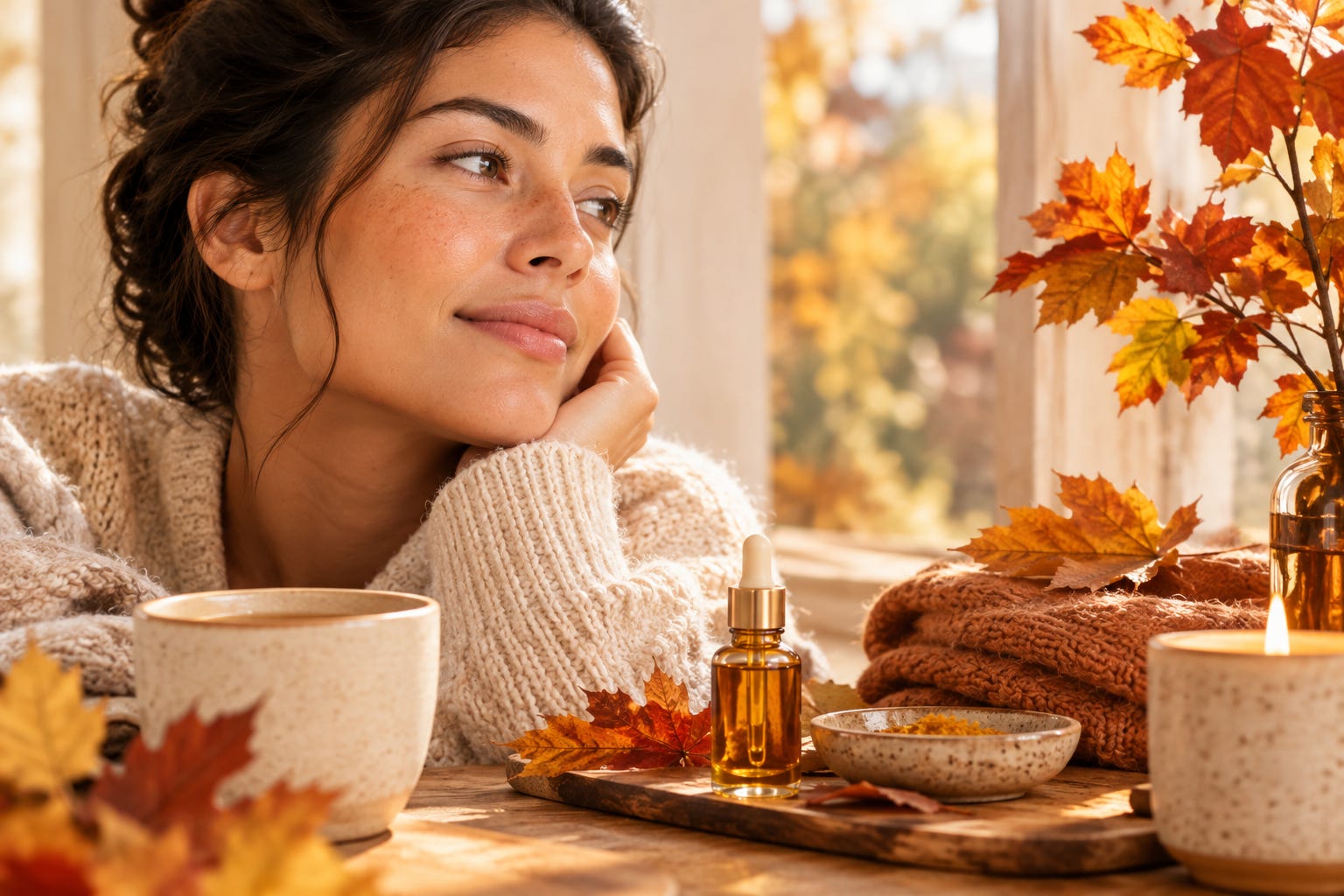
Facial oil do mainly two things:
-
Occlusion: They create a physical barrier that prevent water evaporation (TEWL). This is crucial in autumn as external humidity is low.
-
Lipid replacement: They provide fatty acids and plant compounds that structurally resemble the skin natural sebum. This means rebuilding the lipid matrix, which tend to be lower due to several factors in autumn such as wind, temperature shift, etc.
Oil is usually applied as a last step in our skin care routine. That means, after applying moisturiser. When we do that, oil will automatically seal all the moisture and nurturing ingredients, making them stay longer in our skin so that they can be properly absorbed.
Important fact: If you have never used an oil before, introduce it slowly. Start by using it at night. Place a few drops in your hands, rub them together to warm the oil, and then apply it by gently pressing it into your skin. Gently pat your skin 20 to 30 times.
Why patting your skin? During autumn, temperature fluctuations can reduce the flow of oxygen and nutrients to skin cells. Gently patting your skin may help stimulate circulation and bring more blood to the skin’s surface, allowing the oil to be better absorbed.
Do this especially at night, as the skin’s peak repair and regeneration processes occur while you sleep.
As mentioned in our previous newsletter our Kurkuma oil integrates beautiful ingredients to support this transition.
Here’s a quick snapshot of the main ingredients and how they support your skin.
-
Turmeric Extract helps calm skin inflammation.
-
Black Cumin Seed Oil’s anti-inflammatory properties rebalance the skin microbiome.
-
Jojoba Oil helps replenish what autumn conditions can deplete.
-
Grapeseed Oil supports the barrier lipids that your skin loses when humidity levels drop.
-
Rosehip Oil brightens dull autumn skin and helps regenerate the skin at the cellular level.
Turmeric and Black Cumin stop the inflammation. Jojoba and Grapeseed rebuild the barrier. Rosehip restores radiance. Together, they make a resilient, glowing autumn skin.
And how should we support from the inside?
As you know, the mission of Kurbela is a holistic approach on skin, we love to understand how we can support our skin from the outside as well as from the inside. During autumn, a small ritual before sleeping will also support our body against inflammation.
A warm glass of milk ( you can also use plant-based milk). Dilute it with water if you want to achieve the thickness level of your preference. Then add half a teaspoon of turmeric powder and a pinch of black pepper.
It is beneficial because while we are sleeping, our skin carries out much of its repair and regeneration. A turmeric drink can create a calming bedtime ritual whilesupporting a healthy inflammatory response in the body.
Give it a try and let us know how it worked out for you. This simple habit can become a valuable addition to your evening routine. Turmeric will work for your skin while you sleep!
A word from the heart
As autumn is here, we will be sharing supportive recipes and practical tips to nourish your skin. Those tips will help your skin glow naturally.
For many years, we also suffered from a poor skin condition until we finally understood that it is not only about the products we use. It is also about how we eat, how our skin adapts to changes, and how we take care of ourselves.
We want to be with you on this journey through every step and every single day.
With love,
Angela